Kerala is India at its most languid and lush — a narrow strip of land squeezed between the Arabian Sea and the Western Ghats, threaded through with rivers, lagoons, and 900 kilometres of canals known simply as the backwaters. No other state in India rewards slowing down quite like this one.
From the mist-wrapped tea estates of Munnar to the houseboats drifting through Alleppey's emerald canals, from the spice-scented wildlife forests of Thekkady to Kochi's centuries of Portuguese, Dutch, and Jewish trading history — every region carries its own rhythm and its own shade of green.
This is a land where Ayurveda is a living tradition rather than a spa treatment, where a sunset on a converted rice barge is the standard evening, and where coconut, cardamom, and the Malabar coast's centuries-old spice trade still shape almost everything you eat.
Six reasons Kerala will steal your heart — and your itinerary
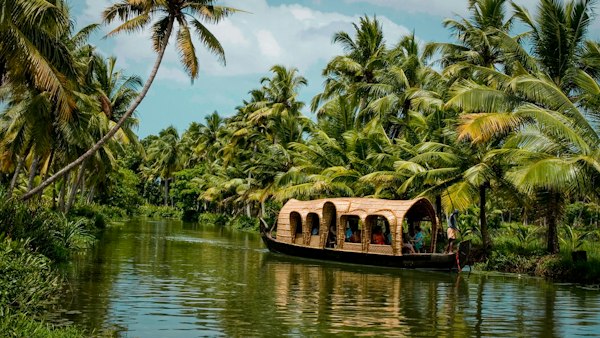
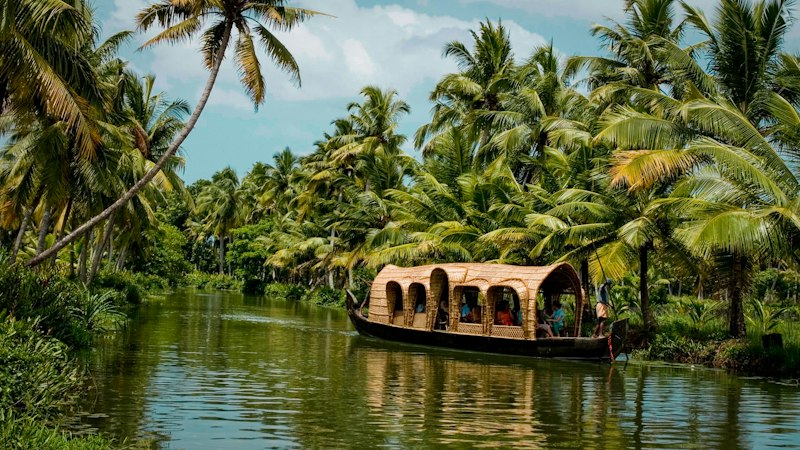
Drift through a maze of palm-lined canals on a private houseboat, your crew cooking fresh Kerala cuisine on board as paddy fields and fishing villages glide past.
Rolling tea estates at 1,600m, where the Western Ghats fold into endless green terraces and the Nilgiri Tahr grazes on the slopes above the clouds.
Glide across Periyar Lake by boat as wild elephants wade into the shallows, surrounded by one of South India's richest tiger and spice-forest reserves.
Chinese fishing nets silhouetted at sunset, Portuguese churches, a 400-year-old synagogue, and a Dutch palace — four trading empires in one small peninsula.
Kerala is the birthplace of Ayurveda. Traditional oil massages, panchakarma therapies, and centuries-old wellness practices, still performed exactly as they were written.
Karimeen pollichathu, appam with stew, and prawn moilee — a cuisine built on coconut, curry leaves, and a spice trade that drew traders here for two thousand years.
Kerala's tropical climate is shaped by two monsoons. Choose your time wisely for the best experience.
Lush, dry, and comfortable. Daytime temperatures of 23–32°C. Backwaters at their most navigable; Onam harvest festival (Aug/Sep) just behind.
Warmer and more humid, but the hill stations (Munnar, Thekkady) stay pleasant. Good value, fewer crowds.
The southwest monsoon arrives in full force — dramatic, green, and the traditional season for Ayurvedic treatments, but heavy rain limits sightseeing and houseboat schedules.
A port city layered with five centuries of trading history — Portuguese churches, Dutch palaces, a Jewish quarter, and the Chinese fishing nets that still work the harbour mouth at dusk.
Fort Kochi's narrow lanes hold antique shops, art galleries, and some of the finest seafood in South India. It's the natural gateway to every other region of Kerala.
At 1,600 metres in the Western Ghats, three rivers meet amid an unbroken sweep of tea plantations first planted by British planters in the 1870s and still worked today.
Eravikulam National Park, home to the endangered Nilgiri Tahr, and the cardamom-scented spice gardens nearby make this Kerala's coolest, greenest escape.
A 900-kilometre network of rivers, canals, and lagoons fringed with coconut palms and paddy fields, traversed by kettuvallam — converted rice barges, now floating houseboats.
An overnight houseboat cruise, with meals cooked fresh on board, is the single most-loved experience in all of Kerala — slow, silent, and entirely unforgettable.
Bordering the Periyar Tiger Reserve, Thekkady combines dense forest, a vast man-made lake, and some of the finest cardamom and pepper plantations in the world.
A boat safari on Periyar Lake regularly brings you face to face with wild elephants, while the surrounding hills hold spice gardens that have supplied global trade for centuries.