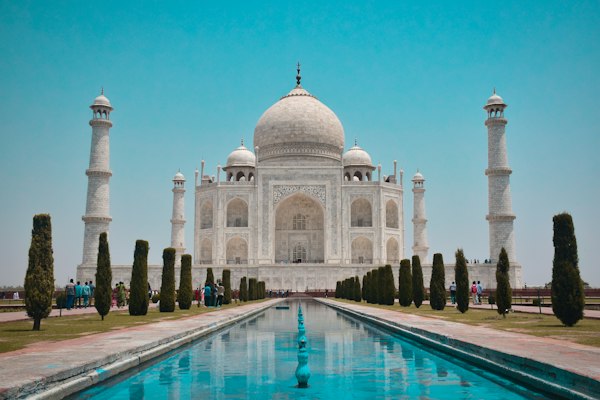
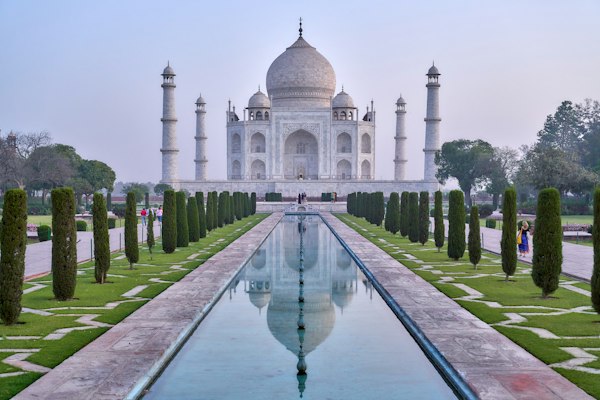
Uttar Pradesh holds two of India's most profound experiences within a few hours' drive of each other — the Taj Mahal at Agra, Shah Jahan's marble monument to love and one of the New Seven Wonders of the World, and Varanasi, among the oldest continuously inhabited cities on earth, where the Ganges' sacred ghats have drawn pilgrims for over 3,000 years.
Ayodhya, revered as the birthplace of Lord Rama, and Mathura-Vrindavan, the heartland of Krishna's childhood, anchor the state's deep Hindu pilgrimage tradition, while Lucknow's Nawabi-era architecture and refined Awadhi cuisine offer a completely different, courtly side of UP.
Prayagraj's Triveni Sangam — the confluence of the Ganges, Yamuna, and mythical Saraswati rivers — hosts the Kumbh Mela, the largest peaceful gathering of humans on earth, held here once every twelve years.
Six reasons Uttar Pradesh anchors nearly every serious India itinerary
Shah Jahan's marble mausoleum for his wife Mumtaz Mahal, and one of the New Seven Wonders of the World — most breathtaking at sunrise, when the marble shifts through shades of pink and gold.
Among the oldest continuously inhabited cities on earth, where the evening Ganga Aarti and a dawn boat ride reveal 3,000 years of unbroken ritual life.
The newly consecrated Shri Ram Janmabhoomi Mandir, alongside Hanuman Garhi and Kanak Bhawan — one of Hinduism's most significant pilgrimage sites.
The heartland of Krishna's childhood — the Braj region's temples, and Vrindavan's Sri Bankey Bihari Temple, draw devotees from across the world.
The Bara Imambara's extraordinary maze-like Bhool Bhulaiya, refined Awadhi cuisine, and a distinctly courtly, unhurried Lucknawi tehzeeb (etiquette).
The sacred confluence of the Ganges, Yamuna, and mythical Saraswati rivers, and host to the Kumbh Mela — the largest peaceful gathering of humans on earth.
Uttar Pradesh's Gangetic plain climate makes winter by far the most comfortable season for both heritage sightseeing and ghat-side pilgrimage.
Comfortable, dry conditions across Agra, Varanasi, and Lucknow. Daytime temperatures of 15–28°C — ideal for the Taj Mahal, temple visits, and riverside walks.
Warming up but still manageable; fewer crowds at major sites than peak winter months.
Very hot across the Gangetic plain, regularly exceeding 40°C — outdoor sightseeing becomes genuinely difficult, particularly at midday.
Home to the Taj Mahal, Shah Jahan's marble monument to his wife Mumtaz Mahal, and one of the New Seven Wonders of the World — most beautiful at dawn.
Agra Fort and Sikandra's Akbar's Tomb round out a city built almost entirely around three centuries of Mughal imperial history.
Among the oldest continuously inhabited cities on earth, its ghats lining the Ganges having drawn pilgrims for over 3,000 years.
A dawn boat ride, the evening Ganga Aarti at Dashashwamedh Ghat, and the narrow lanes of the old city give Varanasi an atmosphere found nowhere else in India.
Revered as the birthplace of Lord Rama, and home to the newly consecrated Shri Ram Janmabhoomi Mandir, one of Hinduism's most significant pilgrimage sites.
Hanuman Garhi, Kanak Bhawan, and the evening Aarti at the Saryu River ghats give Ayodhya a profound, still-evolving pilgrimage character.
Uttar Pradesh's capital, built around two centuries of Nawabi-era architecture and a refined courtly culture still visible in its food and etiquette.
The Bara Imambara's extraordinary Bhool Bhulaiya maze and Rumi Darwaza gateway make Lucknow one of North India's most architecturally distinct cities.